
Remembering the Mass Flight of 1944
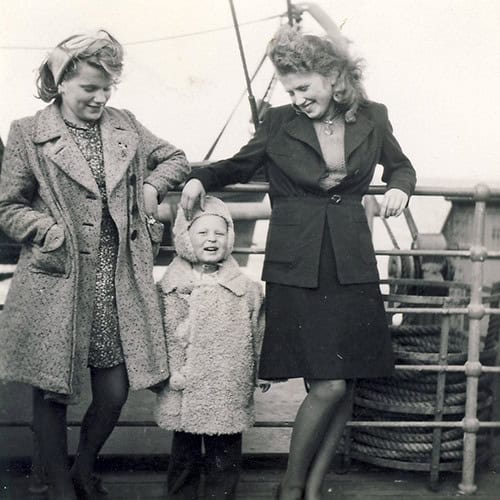
This year, 2024, marks the 80 th anniversary of the Mass Flight (Suurpõgenemine), when an estimated 70,000 Estonians were forced to flee their country ahead of invading Russian forces. Fleeing Estonians were deeply conflicted -- they did not want to go, nor did they feel they could stay. For Estonians in the diaspora, the Mass Flight is like the Great Schism or the Reformation, in that there was a „before“ and an „after“. It is like a „Ground Zero“ from which our lives then emanated.
This important 80 th anniversary serves as a reminder of this huge displacement of people with its multi-generational impacts that also gave rise to our Estonian communities and organizations here in the U.S. This anniversary provides the last best opportunity to collect the memories of those with direct experience of those dark days in 1944. It is a chance to reclaim lost stories and unearth new details, and send these stories forward where they can inspire new generations. It is a time to honor and celebrate our elders who got us here and remind our children from whence they came. Indeed, today it is considered every person’s birthright to know their roots.
It also provides an opportunity to share the Estonian American story with a broader public, who may know little about this chapter in history and its connection to world events today.
As Estonian Americans we can “sit” a moment with our collective story and consider all the ways this story is important to us. It is this story that connects us as “väliseestlased.” It is this story that answers why we are here. We can find fresh meaning in the fact that today – three generations later -- we and our children have maintained or re-discovered our Estonian identity and connection to our homeland. And today we understand the story as a many-faceted and complex one -- of those who left and those who stayed behind, of families torn apart and later re-united. Let us not forget the moment when everything changed.
We invite you to explore our webpage where you can learn about the graceful commemorative statue and permanent place of remembrance being created in Pärnu, Estonia at the site where many departed. You will find a brochure with an opportunity to donate, plus other resources, including a list of Suurpõgenemine events this September in both Estonia and in the U.S.
Timeline of 1944 Events in Estonia
Otto Tief was captured by Soviet forces; Jüri Uluots and members of the Tief government escaped to Sweden.
30 January – Battle of Narva: The first Soviet units crossed Estonian border.
24 February – Battle of Narva: Estonian volunteers launched a counterattack at Narva river.
6 March – World War II: Soviet Army planes attack Narva in Estonia, destroying almost the entire old town.
9 March – World War II: Soviet Army planes attack Tallinn, Estonia.
26 July – Battle of Narva: The Soviets captured Narva.
29 July – Battle of Tannenberg Line: The Estonian and German counterattack stopped Soviet advance towards Tallinn.
26 August – The Soviets captured most of Tartu, what became frontline city for almost a month.
19- 23 September – although German troops were expelled from Estonia, the local anti-Soviet movement (so called Forest Brothers) organized small-scaled armed resistance against Soviet regime.
18 September – Jüri Uluots, prime minister in capacity of president of Estonia, asks Otto Tief to form a government on the eve of the withdrawal of German forces; official gazette published proclaiming the Tief government.
September - The peak of the mass exodus, now known as the "Mass Flight." In the late summer and autumn of 1944 ~75,000-80,000 Estonians fled their homeland to escape Soviet terror.
20 September – Otto Tief attempts to organise the defence of Tallinn against the arrival of the Red Army two days later.
22 September – The Soviets captured Tallinn.
19 December – The entire territory of Estonia was captured by the Red Army.
Suggested Reading List
Children´s Books
Enda (Raudsepp) Bardell, “Innocence in a Turbulent World,” (Friesenpress, 2019.) Estonian version: "Mida see marakratt ikka teab?" English version is available on Amazon and elsewhere online. Beautifully illustrated, the chapters are glimpses of 1944 through the eyes of a child, recollected and told by the author.
Juhani Pütsepp, “On kuu kui kuldne laev,” (Publisher: Tänapäev, Estonia, 2020) (Available in English: “The Moon, Like a Golden Ship,” translated in Canada, Published in Estonia. Also available as an e-book and audiobook. Currently available in English here.
Estonia and Estonians Abroad, Compilations, Collections, Historical Accounts with a focus on the Estonian diaspora.
Ferdinand Kool, “DP Chronicle, Estonian Refugees in Germany, 1944-1951,” (Estonian Archives in the U.S., Lakewood, N.J., 2014), translated from the Estonian by Aime Martinson Andra
Jaan Pennar with Tõnu Parming and P. Peter Rebane, “The Estonians in America 1627-1975,” (Oceana Publications, New York, 1975). Notes – the subtitle is “A chronology and fact book,” which includes interesting material and details on post-war refugees.
Priit Vesilind and Enn Kõiva, “Estonians in America 1945-1995, Exiles in a Land of Promise,” Notes - A comprehensive overview of Estonian communities and organizations in the United States, rich with photos and a useful index. Published by the Estonian American National Council, Inc. Order directly from EANC.
Mai Maddisson and Priit Vesilind "When the Noise Had Ended. Geislingen's DP Children Remember." (LAkeshore Press, 2009.) Estonian children's memories of fleeing from Estonia amid terror and chaos and the journey to the refugee camps of Germany after World War II and from there to the New World. Also publishe d in Estonian: "Kui sõjamüra oli vaibunud. Geislingeni põgenikelaagri laste mälestused." (OÜ Hea Lugu, 2013.)
Maria Spann, “Children of the 1944 Estonian Mass Flight.” A collection of photo portraits and stories as told by people who were children at the time of the escape from Estonia during WW2. Available for purchase.
Estonian History (not specifically addressing the diaspora)
Andres Kasekamp, “A History of the Baltic States,” 2010. One of the first English-language books to provide a comparative survey of Baltic history.
Mart Laar, “War in the Woods,” (Compass Press, Washington D.C. 1992), translated from the original Estonian by Tiina Ets. Notes -- subtitle is “Estonia’s struggle for survival 1944-1956”. Initial chapters deal with what is going on in Estonia that led to SP
Toivo U. Raun, “Estonia and the Estonians,” (Hoover Press Publication, U.S., 2001). Notes – comprehensive survey of Estonian history, does not specifically address diaspora.
Novels and Short Stories
Mati Unt, “Brecht at Night.” Available in both Estonian and English. A strand of the novel that deals with the Soviet occupation of the Baltics.
Jaan Kross, “Treading Air,” (Harvell Press, London, 1998), translated from the original Estonian by Eric Dickens. Notes – One of Estonia’s most well-known novelists takes on what it was like to stay.
Mati Unt, “Brecht at Night,” (Dalkey Archive Press, London, 1997), translated from the Estonian “Brecht ilmub öösel.” Notes – described as an irreverent, documentary novel, that interrogates the past.
Nancy Schwarzkopf Jarmin, “Still the Caretaker: A Latvian Girl's Journey,” (2024) Inspired by true accounts in interviews and visits to various locations in Latvia, Zaiga's story resonates today as once again children are forced to flee their homes while bombs rain from the sky.
Valev Uibopuu, "Hea Leib," published in the Estonian Literary Reader, compiled by Ants Oras (Indiana University Press, Bloomington, Indiana, 1964). Notes – a short story about the leaving-by-boat moment.
Published Memoirs
Kaia Gallagher, “Candles for the Defiant, Discovering my Family’s Estonian Past.”(Atterberry Press, 2024. Available for purchase. A memoir highlighting a family’s courage and determination to survive in war-torn Europe. Available for purchase on Amazon.
Jaak Jurison, “The Last Train from Estonia,” (Kurni Press, Newport Beach, California, 2016). Notes – Gripping account of the author’s experience in Estonia in the 1930s and 1940s, including his perilous escape.
Alfred Kaarson, “A Song of Survival,” (Luminare Press, Eugene, Oregon, 2019), translated from the original Estonian by Maie Kaarsoo Herrick. Notes – the subtitle is “Memories of Estonian life spanning the twentieth century. A personal account that includes much social history.
Ann Lehtmets and Douglas Hoike, “Sentence Siberia,” (Wakefield Press, Kent Town, South Australia, 1994). Notes – the subtitle is “A story of survival.” Author’s account of living through years in Siberia.
Ann Mihkelson, “Three Suitcases and a Three Year Old,” (Kangaroo Press, Australia, 1992). Notes – The author’s account is of her parents fleeing Estonia and eventually moving to Australia, where she grew up.
Agate Nesaule, “A Woman in Amber,” (Soho Press, New York, 1995). Notes – the subtitle is “Healing the Trauma of War and Exile,” a Latvian account of the Great Flight.
Elin Toona Gottshalk, “Into Exile: A life story of war and peace,” (Evershine Press, Inc./ Lakeshore Press, 2013). In Estonian: „Pagulusse“, Varrak, 2017. Notes - This masterful memoir was nominated by The Economist magazine as one of the Best Books of 2013. This is Elin’s personal account of the horrors she and her family experienced during WWII followed by an even more confusing peacetime in class-conscious post-war England while adult “DPs” (Displaced Persons) and Elin struggled to find their identity. English version available for purchase at Into Exile: A life story of war and peace: Elin Toona Gottschalk: 9780984644032: Amazon.com: Books. The Estonian version is available for sale at Varrak and RahvaRaamat.
Jaak Treiman, “Võlulehviku Tuules” (Tammeraamat, Estonia, 2018), translated into Estonian by Merike Pilte. Notes – the subtitle is “Ühe eesti pere lugu komel mandril.”
Family Memoirs
Olav Visnapuu, “Eestis tulime,” (Diggipod, U.S., 2019). Notes – account of the family’s 1944 escape in Estonian and English with many photos.
Video: The Mass Flight: Trauma, Coping, and Resilience
This special presentation, "The Mass Flight: Trauma, Coping, and Resilience," features Dr. Jaak Rakfeldt, PhD, a council member of the Estonian American National Council (EANC). This video clip is the English-language version of a poignant speech delivered by Dr. Rakfeldt on September 19, 2022, at the Estonian Parliament in Tallinn.
In his address, Dr. Rakfeldt delves into the profound experiences of trauma, coping, and resilience faced by those forced to flee Estonia. Drawing from his own family's journey, he provides a deeply personal and historical perspective on the plight of the 80,000 Estonians who escaped the brutal Soviet onslaught and occupation in the fall of 1944.
Dr. Rakfeldt joins many in urging the members of Parliament to establish a day of remembrance for these brave souls, ensuring their stories and sacrifices are never forgotten.
If you wish to use this video for a community or educational event, please contact us at erku@estosite.org.
Additional Resources

Estonian Institute of Historical Memory
The Second World War forced tens of thousands of Estonians to leave their homeland...
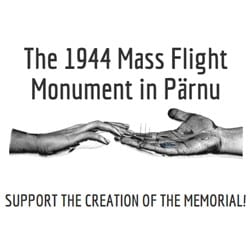
ÜEKN: The Mass Flight of 1944 Commemorative Sculpture
Significant achievement is to erect a sculpture monument in the city of Pärnu to share the history of our mass flight with all who visit Pärnu... Continue reading

VABAMU
Vabamu and many other memory institutions and civic initiatives across Estonia commemorate this harsh period in Estonian history with various events...
VEMU Estonian Museum Canada
“Our Relics”: A Collection Campaign Dedicated to the 80th Anniversary of the Great Escape...

The Estonian Archives in the U.S.
The Estonian Archives in the U.S., Inc. (EAUS) was established in 1969 with the aim to preserve the history of Estonians in exile.
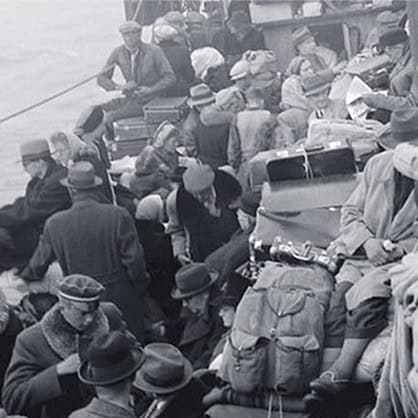
Global Estonian: Mass Flight of 1944
The Mass Flight was a mass escape from the invading Soviet Red Army from Estonia in the late summer and autumn of 1944...
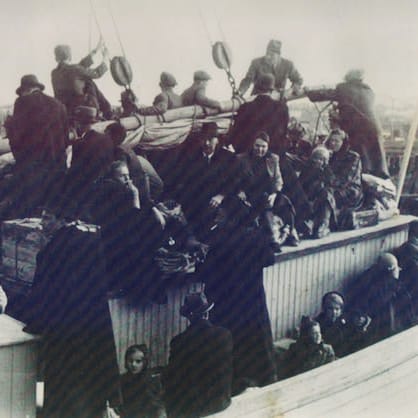
Article in Eesti Kirik
They had to leave behind their homeland, possessions, often their family, and in the new society, the refugees faced difficulties in adapting...
The Free Estonian Word (Vaba Eesti Sõna)
Several articles have been published in the newspaper "Vaba Eesti Sõna" about the mass flight of Estonia in 1944. Read an article by Elvi Urv.